

Diaspora School Camp 2022
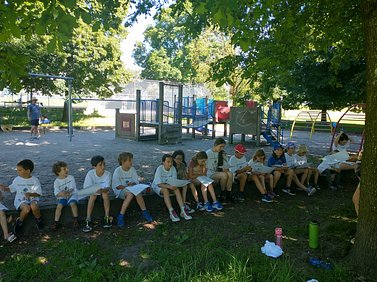
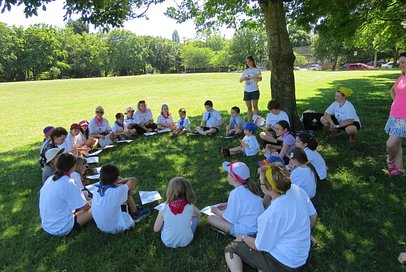
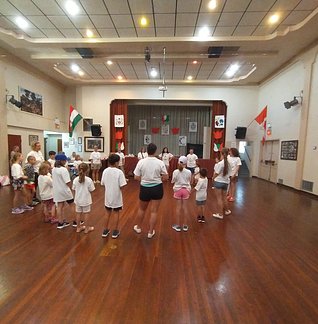
After the successful camp three years earlier, the Szent László Hungarian School organized this year's camp with the goal of reviving the Hungarian community after the pandemic, and with it the desire to learn the Hungarian language and culture. We also wanted to give the children attending our school — and Hungarian-speaking children of Hungarian descent living in the surrounding area — an opportunity to deepen their Hungarian, and to get to know Hungary's history, geography, cultural treasures, and traditions. The camp was a day camp this year rather than residential, running from 9 a.m. to 5 p.m. The Our Lady of Hungary parish, which provides our classrooms during the school year, hosted the camp as well, so we could use the stage and the main hall, while sports sessions were held in the park and playground a five-minute walk from the school. During the organizing, a grandmother wrote to enrol her grandchildren, who were visiting from Montreal. It turned out her daughter had studied at the Szent László School before moving to Montreal, where she is an active member and teacher of the Hungarian school there. In the end, she took on teaching one of the groups. A fantastic example that — although we live 3,700 km apart — we support each other when needed.
The camp was wonderfully balanced, and our time together passed in great spirits. The camp's theme — the folk tale — proved to be a splendid choice: every age group loves listening to them, and they speak to everyone in some way. Everyone loves to tell stories and daydream, as we experienced once again. Based on the feedback, the children thoroughly enjoyed the week. We started with 25 children, but in one family the two older kids told so many stories at home that the youngest joined mid-week. When the camp ended, one parent wrote that her little boy woke up on Saturday morning saying: let's go to Hungarian camp — but this time not for five days, that's too short; make it eight. We could not have received greater praise!
The campers' language skills ranged from basic Hungarian-as-a-foreign-language to near-perfect. We deepened the children's Hungarian partly through constant Hungarian speech and partly through the daily sessions — for that week, the camp functioned as a little Hungarian island.
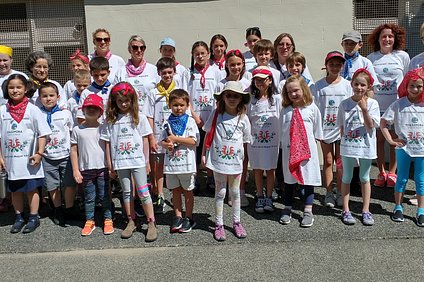
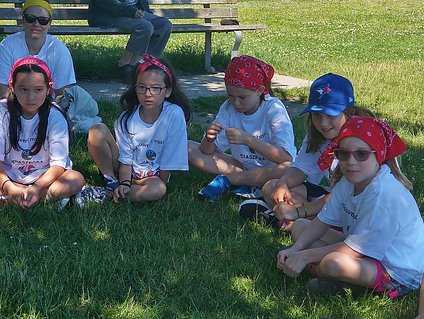
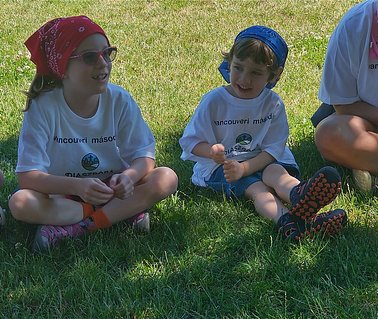
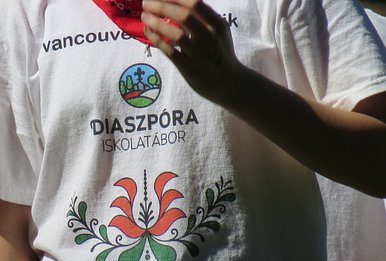
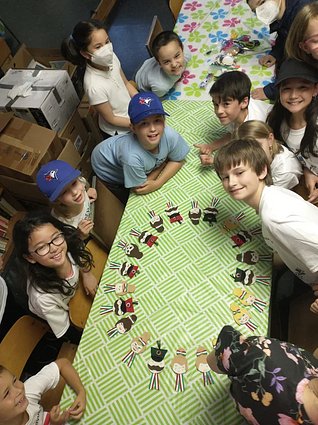
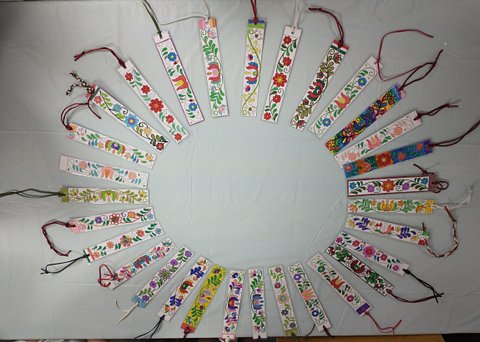
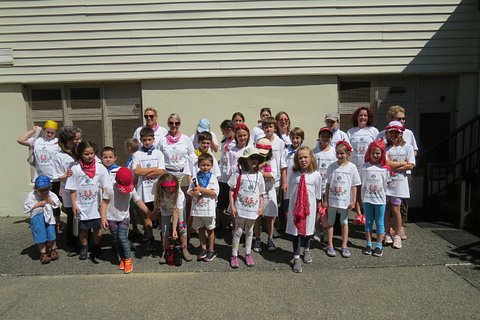
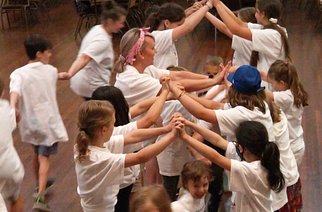
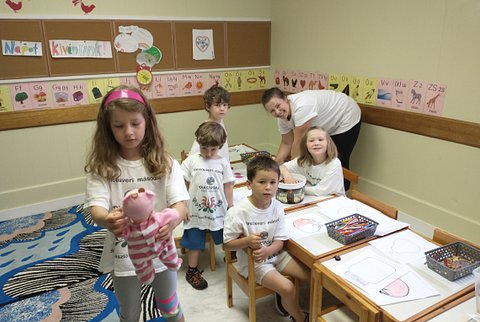
The days were organized around five different themes, each also touching on Hungarian grammar, literature, history, and geography. Teaching was playful, using the tools of experiential pedagogy. Every child received a folder to collect the week's material in, and on Friday every age group proudly showed theirs to their parents. This year's novelty was the camp T-shirt, which the children wore with great joy. Dance instruction ran in two groups: the little ones were just getting to know the basics, while the older ones already managed more serious steps. The week's closing event was Friday's puppet show. In the morning the children picked their favourites from the school's puppets, then together we wrote a tale, which we performed on stage. It was wonderful to see how creatively they crafted the camp's tale from folk-tale elements after a week of active story listening and reading. The planned program was realized to the fullest. We closed a rich, lively, good-spirited camp — one we would love to continue in the years to come.